At 4:30 on a Saturday afternoon in December I sat at my cousin's kitchen table with cardamom tea going cold beside me, writing a promissory note by hand on lined paper while she watched me spell "promissory" wrong twice. Dana is 31, a home health aide, and the transmission in her 2011 Civic had died on a Tuesday eleven days earlier, which for a person paid per visit who drives between clients is not an inconvenience. It is a pay cut with a tow truck attached. The repair quote came in at $3,900. The safer used-car math pushed the real total to $5,000 even.
Her options had numbers on them, and the numbers were ugly in the specific way they get ugly for people who work. Her credit score was 588, dragged there by two medical collections from an appendectomy in 2022 that the hospital's financial aid office had, in writing, once promised to forgive. Her credit union had approved her for a personal loan at 13.4 percent over 48 months — $111.86 a month and about $3,370 of interest on the $5,000, priced for a person the scoring models assume will vanish. Her actual default risk was never 13 percent. Her actual risk was being 31, with bad paperwork, and a boss who needs her at doorbell number one by eight.
The note we wrote that afternoon contained a late-fee clause we agreed on the spot never to enforce, and that unenforceable sentence turned out to be the most pivotal line in the whole document. The reason is below, and it is the reason the note existed at all: the paper was never for the bank. There was no bank.
her score was 588
Everythin about the loan's pricing flowed from that one number, so it is worth sitting inside it for a minute. A 588 sits below the line where mainstream underwriting stops reading your story and starts pricing your stereotype, which is how a nurse's aide with four years of unbroken employment gets quoted double-digit money for a used Civic. The two collections were $611 and $489, fully documented, provably promised away, and still on the file cuz the hospital's forgiveness letter and the billing vendor's database had never formally met. Her credit score was not a verdict on her reliability. It was a verdict on her paperwork, and paperwork is a solvable problem — but solvable slowly, and the car was dead now.
four percent, not zero
The rate took longer to agree on than the amount. I offered to charge her nothing; she refused, on the correct grounds that free money from family arrives pre-poisoned with obligation, and a personal loan with no interest is just a favor wearing a costume. We landed on 4.0 percent — near the going rate for used-car financing for a borrower with better paper than hers, low enough to save her approximately $2,000 against the credit union's quote, high enough that we were both conducting a transaction instead of performing a rescue. She refused. I relented. My accountant friend later confirmed the rate also keeps the IRS uninterested, since the applicable federal rate for a short family loan hovers right around there, and a below-market deal under $10,000 lives inside the gift-loan exception regardless.
one page, two signatures
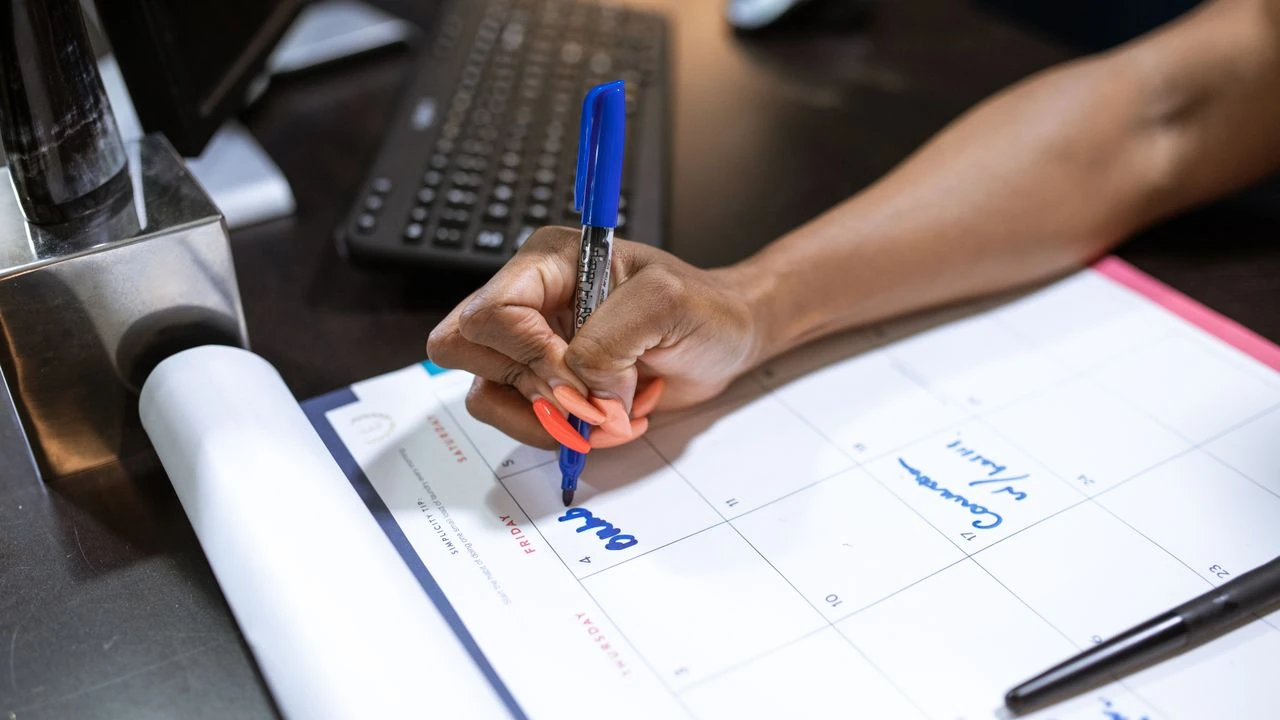
The note itself is not a lawyer's work. One page, lined paper, both full names at the top: $5,000 principal, 4.0 percent simple interest, $725 due the first of each month starting January 1, seven payments, and a final clause about a 5 percent late fee that we wrote in and immediately agreed neither of us ever wanted to see enforced. We both signed. Her sister witnessed. A photo of the page went to both our phones, the original went into Dana's fireproof box beside her lease, and the whole ceremony took nineteen minutes at that kitchen table while her sister's kids argued about a board game in the next room. It cost us nothing and it will outlive both of our feelings, which is precisely what it was for.
seven hundred twenty-five a month
She set up an automatic transfer on January 3 and it has run like a utility bill since, seven payments of $725 arriving on schedule while the repaired Civic — a 2013 model from a dealership lot, $1,100 over the repair quote and worth every dollar — made it to every shift. Payments one thru five went exactly to plan. Payment six, the June one, arrived on May 29, four days early, with a text that read "don't say anything, the check was just sitting there." The note gave her the right to pay like a stranger. The text is how I knew the paper had done the opposite of what strangers' contracts do.
what her score did meanwhile
The family loan reports to no credit bureau, and that cuts both ways. It cuts both ways. None of my on-time $725s could prop up her file, and none of my existence as her creditor could sink it, either. What moved her number was everything around the loan: she paid off the two medical collections in February with her tax refund, opened a secured card in March, kept its utilization under 20 percent, and by July her credit score had climbed from 588 to 634 — forty-six points without a single point of help from me. The note protected the relationship while her own file healed at its own speed, which is the exact division of labor I wanted, and the reason I never once weighed cosigning instead.
the line we never used
On July 5 the seventh payment cleared, $5,075 all told, and we did the settlement the only correct way: at that same table, with tea, crossing out the balance line and writing PAID IN FULL with the date and both initials. Dana asked to keep the note. I said evidently, it's hers, and she looked at me like I had offered her my firstborn, because in her accounting the paper was mine and the money had been hers for seven months. We argued about who should keep a piece of paper with no remaining value, and I lost, which felt correct. The late-fee clause died unenforced, as designed, and the design was the point.
tea, seven months later
People ask whether writing the note felt awkward, and the honest answer is that the awkwardness was the product. Money between family without paper has exactly two endings — unspoken resentment or spoken catastrophe — and the note converts both into a boring document nobody hasta interpret. Two strangers' worth of clarity, one family's worth of loyalty, 4.0 percent interest, nineteen minutes of handwriting, and a cousin who still reaches every doorbell on time. The kitchen smelled like cardamom again in July. The tea went cold again. Some rituals earn a second pot, and some pieces of paper are worth framing even when the only thing left on them is paid.