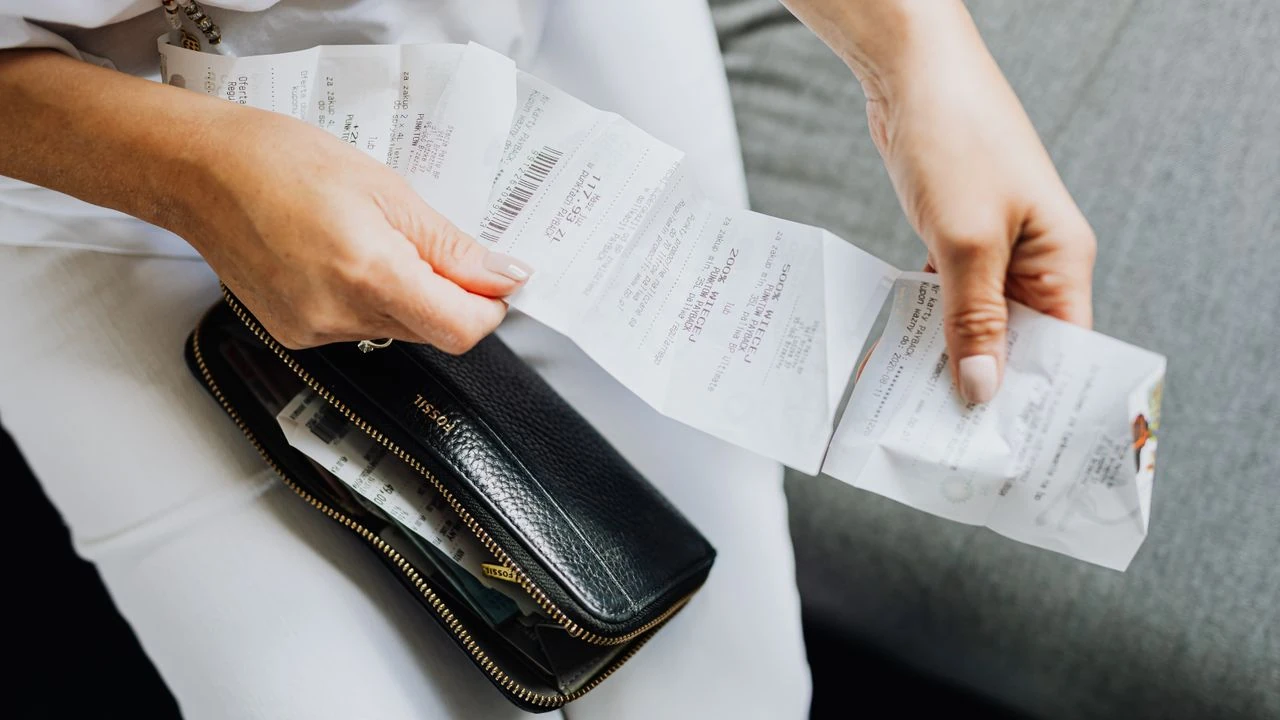
At 12:52 on a Tuesday I had the bottom drawer of my desk half out on my lap, clearing it before our office moved floors, when a cream-colored slip of paper slid out from under a stapler and landed face down on the carpet. I picked it up expecting a takeout receipt. It was a trade confirmation dated March 3, 2009, for twelve shares of Calneva Financial Group, a California savings-and-loan holding company whose ticker symbol I had to look up on my phone just to remember what it was. Commission: $19.70. Total paid: $95.90.
I was 26 that spring, earning $38,000 a year at a county planning office, and $95.90 was a week and a half of groceries or two months of my transit pass, which is the only reason I remember the number at all. The company itself got $76.20 of my money. The brokerage got $19.70 for pressing a button. Nobody flagged it. That commission was 20.5 percent of my entire position before the market even had a chance to work against me, and the confirmation printed the figure at the bottom in plain 8-point type, and I filed the slip away without reading it, the way a person signs a gym contract and skips straight to the signature line.
Here is the strangest part, and the reason the slip survived three apartments and two job changes. The company on it has been dead since 2013 — Calneva failed, the branches reopened under someone else's logo, and my twelve shares became a lesson with a dividend schedule of never — yet the slip outlived the company, and a brown coffee ring bleeding thru one corner of its letterhead has quietly become the most demanding test I run on any investment I consider now. That test has killed more purchases for me than the 2009 crash did.
twenty cents on the dollar
Here's the arithmetic I refused to do at 26. A fifth, up front. $19.70 against $95.90 comes to 20.5 percent, which means the stock had to gain more than a fifth of its value before I saw a nickel of profit. If Calneva had risen 10 percent that year — a truly good outcome for a bank stock in the middle of a recession — I would still have been down more than 10 percent on my money once the commission cleared. The gap between what the market paid and what I received was wide enough to swallow entire bull markets. It took me years to understand that the fee was not a cost of investing. It was the whole return, handed to somebody else.
the advisor who never mentioned it
My uncle helped me open that first account, and for two years the only guidance attached to it came from a call-center investment advisor named, as far as I know, Dave, who told me to keep dollar-cost averaging and hung up. Three calls, maybe eleven minutes total, and the words "commission" or "expense ratio" never came up once. I didn't know to ask. Dave was reading a script. The slip in my drawer turned out to be the first document that ever made the cost of my own money visible to me, and it took a physical piece of paper to do what a decade of statements had never done, because statements summarize and a confirmation accuses.
the first index fund I actually understood
In 2016 a coworker and I hashed out the numbers over two lunches, and that fall I snagged my first index fund — a broad total-market fund with a 0.04 percent expense ratio and no commission at all. The math flipped everything. Four cents against nineteen dollars and seventy. A $95.90 purchase thru the old commission route needed that ugly 20.5 percent head start before it broke even, while the same $95.90 in the index fund starts working at 9:30 on the first morning, and the annual cost of holding it comes to approximately four cents. I sat with that comparison longer than I sat with anything else that year, partly cuz it quietly indicted every trade I had made since 2009 and partly cuz no professional had ever shown it to me.
the coffee ring test
That brown ring on the corner of the slip became a private test I run before any purchase, and I can describe it in one sentence. If I cannot state, in one sentence, what a trade costs me to get in, to hold for a year, and to get out — the way the slip states $19.70 in plain type — I dont make it. The test has killed a structured note a bank rep pitched me in 2021 that charged 4.5 percent upfront and hid it inside the price, an actively managed ETF carrying a 1.18 percent expense ratio, and a real estate syndication my brother-in-law brought up at Thanksgiving with a spreadsheet he could not answer questions about. It has saved me from myself at least once a year since.
what the number did over a decade
Last winter I dug into every statement that old account still had, pulling seven years of history into one column to see the full damage in a single cell. Between 2009 and 2015 I made 23 trades there, and the commissions, the bid-ask spread, and one $40 annual IRA fee stacked up to $872.47 on deposits that totaled $6,300. That is 13.8 percent of everything I put in, gone before a single share moved in my favor. An investment advisor would call that friction. I call it tuition.
why the slip stayed
The FDIC sold Calneva's deposits to a regional buyer over a weekend in August 2013, the branches reopened under a new name on Monday, and the equity holders — me and my twelve shares — got nothing. Worth zero. I remember reading about it on a lunch break and feeling oddly calm, because by then the position was tuition I had already written off in my head. The peculiar part is that the confirmation moved folder to folder with me thru every move, and I never once articulated why I kept it. I think I know now. Some people frame a photo of a car crash. I keep a $19.70 commission.
what the frame cost
The frame, since you will ask, was $9.99 at a craft store, and yeah, I ran the coffee ring test on it. Nine ninety-nine, no recurring charge, no expense ratio, no servicing agent, total cost of ownership fully disclosed on a sticker. The cashier did not try to sell me a premium framing tier. It is the only purchase in my house with a cleaner fee story than the index funds, which is an absurd thing to be able to say about a piece of molded plastic, and I say it anyways.
an empty drawer on a Tuesday
The drawer went back into my desk empty at 1:04, twelve minutes after the slip landed on the carpet, because everything else in there was dead batteries and a hotel key card from 2019. The confirmation survived the purge. It sits in a cheap frame now, on the shelf above my monitor, coffee ring facing out, the closest thing my desk hasta a security system. Whenever I'm about to buy something with a fee I can't explain in one sentence, I look at that $19.70, and the number does what it has done since 2009 — it asks me exactly who is getting paid.