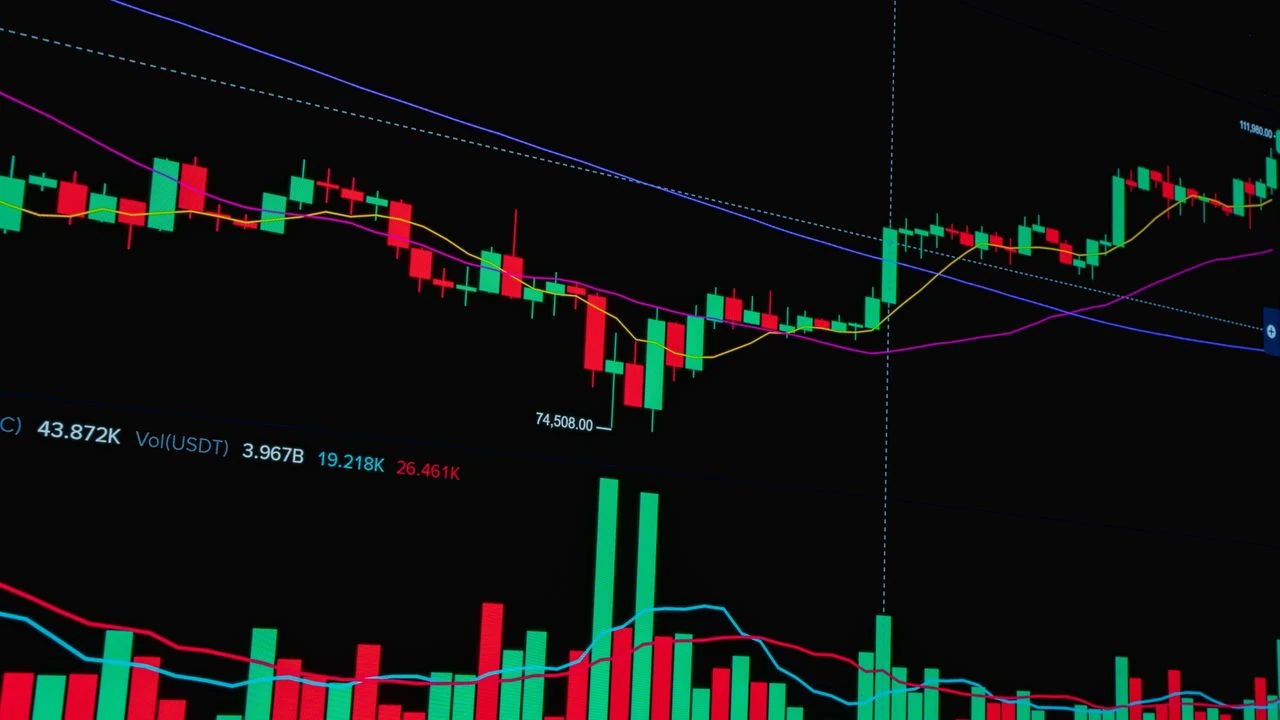
At 8:20 on a Sunday morning I sat on the porch with my second coffee while the brokerage app said minus 11.2 percent, in red, for a position I had snagged expressly because it was not supposed to do that. The fund was a utilities portfolio, twelve electric and gas companies, marketed from its factsheet to its podcast ads as defensive. Right below it on the same screen, the boring total-market index fund I have owned since 2017 showed plus 19.4 percent over the same stretch. Same morning. Same deposits. One of them was supposed to protect me.
The stakes were more specific than a bad morning. The position held $22,600, about 15 percent of my taxable account, and it was earmarked as the stable half of a roof replacement a contractor had quoted at $18,900 for the coming spring. I had chosen it the way people choose a fireproof box, not a growth engine. Watching a fireproof box lose a ninth of its value while a fund with no defensive pretensions whatsoever did the opposite was its own kinda education, tuition due immediately.
Page four of the fund's own factsheet says the quiet part out loud, and I will get to exactly what it says, cuz it rearranged how I read every pitch I have received since. The short version: the word "defensive" was doing all the work, and the arithmetic underneath it was shakier than anything in my aggressive holdings.
a loophole I thought I found
In September 2024 I moved that $22,600 in on purpose, and I did it with the smugness of a person who believes he has found a loophole. Rates were being discussed like a storm front on every finance program I half-listened to; my plan was to own things that would not crack when the weather turned, and utilities are the classic answer to that worry, everyone said so. The fund yielded 3.6 percent. The broker's one-page summary used the word "defensive" three times in eleven sentences. I printed it. I actually printed it, which tells you how much I trusted the paper over my own arithmetic.
the word on page four
Here is what I missed. Page four of the fund's own document — not the broker's summary, the fund's — carries a line stating that utilities are among the most interest-rate-sensitive equities in the market, cuz they borrow heavily to build plants and pay bond-like dividends that compete directly with Treasuries for the same income buyers. When the 10-year Treasury yield climbed from 3.8 percent toward 4.7 percent, my defensive fund was fighting a headwind made of arithmetic. An income buyer who had accepted a 3.6 percent yield at low rates could abruptly get 4.6 percent from a government bond carrying none of my fund's risk. Money left. The price fell 11.2 percent. The word "defensive" appeared nowhere in that chain of cause and effect.
bonds wearing hard hats
That is the honest description of what I owned: bonds wearing hard hats. A utility is a capital-intensive business that finances substations and transmission lines with debt, so rising rates squeeze it twice — borrowing costs climb, and the dividend yield hasta rise to stay competitive, which means the share price hasta fall. My fund carried a weighted payout near 66 percent of earnings and debt loads averaging north of two times EBITDA across the holdings, none of which showed up in the word defensive. All of it showed up in the drawdown. I had snagged a bond proxy and priced it like a bunker.
the markup on feeling safe
The deeper problem is that I paid for the label twice. Entry cost: I snagged at $31.40 a share, near the top of the fund's three-year range, cuz feeling safe was worth a premium to me in October 2024. Ongoing cost: the expense ratio ran 0.46 percent, more than ten times the 0.03 percent charged by the same broad ETF I could have owned instead, the one that was meanwhile outrunning it by 30 points. Defense, as sold, was a product with a markup. Real defense — an emergency fund, a bond ladder, a payable mortgage, a job with health insurance — costs nothing per year, has no ticker, and cannot be marketed to me by anyone with a commission to earn.
selling at minus eleven
I sold half the position in late March at minus 9.8 percent, and I wanna defend that decision even though it felt awful in the fingers. The money has a job — a roof replacement quoted at $18,900 for next spring — and I will not gamble a roof on a sector thesis, no matter how many one-page summaries call the thesis defensive. The proceeds moved into a Treasury money market fund yielding about 4.4 percent, parked, boring, doing nothing clever. A third of the original position I kept, partly for the 3.6 percent dividend and partly cuz liquidating everything at the bottom is its own species of mistake. The roof money now has zero chance of being down 11 percent when the contractor shows up.
the boring fund that won
I keep coming back to the two numbers on that Sunday screen. The total-market index fund returned 19.4 percent on a 0.03 percent fee and required from me exactly one decision, made in 2017, which was to buy it and then leave it alone. The defensive fund returned minus 11.2 percent on a 0.46 percent fee and demanded constant attention, cuz every month I was reading about rates, checking duration charts, poking at the holdings list for reassurance that never arrived. Volatility aside, attention is a cost too. One position paid me. The other billed me twice.
second cup, same porch
The fund is still in my account, down about 6 percent from where I sold the roof half, and I check it less frequently than I check the weather. Defense got redefined for me on that porch, between the first red number and the second cup of coffee, and the new definition is shorter than the old one. Not a sector. Not a label on a factsheet, not a 3.6 percent yield with a hard hat drawn on top of it, and not the 11.2 percent morning that ultimately made me read fine print I had printed myself. It is a price you refuse to pay and a job you refuse to gamble. The app still opens on the same two lines, red above green. I read them in the same order every time now.