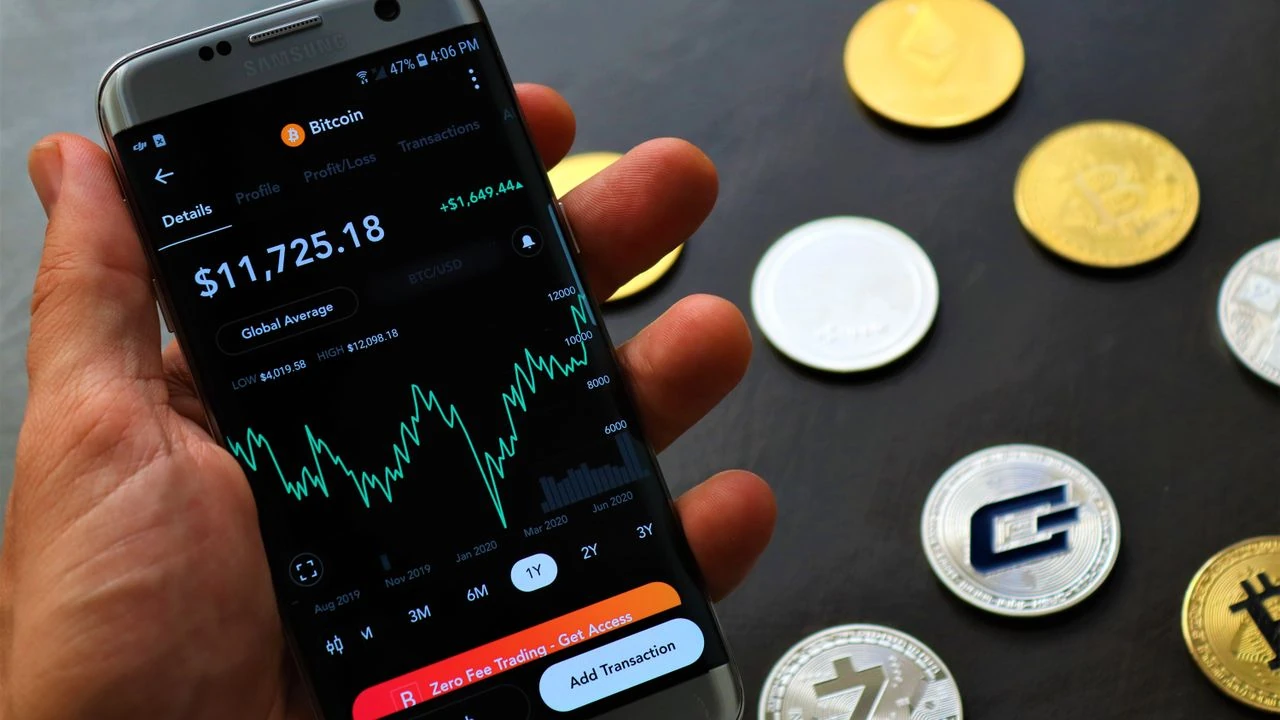
12:40 PM on a Tuesday, desk lunch, sandwich still folded in its wrapper, and the amount field on my screen says $18,500. I look at that number for a while. Then I delete all five digits and type 20 instead. The address in the receive field belongs to my hardware wallet, fresh off a firmware update, and the plan is to move my whole crypto slice across before the market does something theatrical this afternoon. The sandwich can wait. The $18,500 can wait forty more minutes too.
Here's the size of the mistake I'm refusing to make twice. My crypto slice is capped at 6 percent of investable money by a rule I wrote in 2022 after a bad spring, and $18,500 is the whole slice today. Everything else I own behaves itself in an index fund or sits in high-yield savings earning its quiet 4.1 percent. One mistyped character in a 34-character address and the wire goes to a stranger's vault forever. Exchanges reverse fraud sometimes. Blockchains reverse nothing.
So the money leaves in two waves. The first wave is $20, and it has one job: survive forty minutes on the far side. Only if that tiny twenty-dollar transaction lands, confirms twice, and sits there behaving itself does the second wave of $18,480 get a valid destination address at all. My coworkers think the ritual is theater. The ritual cost me 31 cents. Carelessness costs more.
six characters at each end
Before any coin moves, the address gets the full interrogation. I read the first six characters off the hardware wallet's own screen, then the last six off the screen too, and match them against what I typed, out loud, like a pilot reading a checklist to nobody. Copy-paste is banned in this house. Clipboard malware swaps addresses silently, and the paste looks perfect because the thief keeps the first and last characters identical. The middle is where your money lives elsewhere. Reading aloud feels ridiculous til you price a mistake.
Pavel's $2,300 lesson from 2023
The paranoia has a source and his name is Pavel. In November 2023 he moved $2,300 of bitcoin between his own wallets, pasted the address like invariably, and a clipboard hijacker traded it for one that differed somewhere around character nineteen. The transaction confirmed in nine minutes. There is no support line for that. He now dictates addresses to his wife while she types, which is its own kinda marriage test, and he waits a full hour where I wait forty minutes. We argue about the extra twenty minutes every single time, and I intend to keep losing.
thirty-one cents of insurance
The test wave went out at 12:46 PM wearing a network fee of $0.31. For the price of a gumball I snagged proof of three separate things: my typed address matches the device, the updated firmware signs correctly, and the network actually delivers where I aimed it. Insurance doesnt get more honest than 31 cents. The forty-minute wait isn't about the chain being slow, because two confirmations typically land inside twenty minutes. It's about refusing to let urgency anywhere near the send button. Every disaster story I've collected starts the same way. I was in a hurry.
forty minutes and one sandwich
So I ate the sandwich and read a paper book, not the charts, because watching a confirmation timer is like watching bread. At 12:58 PM the $20 landed with its two green confirmations. I wrote the transaction ID on a sticky note, first eight characters anyways, and stuck it under the keyboard edge where sticky notes go to be forgotten forever. Then came the hard part that no checklist covers. Nothin moved for another twenty-eight minutes while the clock ran down. The sandwich was good. The waiting was better.
two confirmations, then the gate opens
Why two confirmations and not one? One confirmation means the transaction is in a block. Two means a second round of miners somewhere built on top of that block, which makes rewriting the first one approximately the cost of a used car in electricity, for a $20 prize. Nobody rewrites a block for my gumball transaction. But rules exist so I don't have to renegotiate with myself at 1 PM on a Tuesday. The rule says two. The rule doesn't care that the sandwich is gone.
6 percent, no matter the headline
The ritual also marks the border of how much of my life this asset class gets to touch. Six percent, by the 2022 rule, rebalanced once a year on my birthday, no exceptions for bull markets or dinner-party prophets. The other 94 percent doesnt need a hardware wallet, a 40-minute wait, or a single moment of my attention: it compounds in an index fund through payroll and a high-yield savings account that has never once asked me to read an address out loud. Boring infrastructure for boring money. The bitcoin slice is my one deliberately loud holding, so it gets the loud security budget.
1:26 PM, the second wave
At 1:22 PM I typed the address one more time, character by character, and read the ends out loud to an empty office. 1:24, device confirmed the address on its own screen. 1:26, the second wave ultimately left with the same $0.31 class of network fee, forty minutes to the minute after the first test transaction went out the door. Both transactions are on the public ledger forever, a $20 schooling and an $18,480 graduation on the same afternoon. I unwrapped the second half of the sandwich and ate it without checking anything. The forty minutes did their job. The money is home, and I never once hurried.