On Tuesday, July 21, at 6:15 in the evening, I stood at the end of my gravel driveway holding a county envelope I had not opened, because the number inside had already reached me an hour earlier by way of the feed store, and I wanted one quiet minute with my well house before the math began. The village had voted in May to annex our township road. Inside the envelope was my choice: $14,000 to connect to municipal water and sewer, or $3,200 to keep my 1983 well legal under the new code. One mailbox. Two futures. The mosquitoes were bipartisan.
where the village line moved
The stakes are civic and personal at once: annexation brings village water with village bills, a connection deadline of August 2029, and monthly service charges around $85 whether you drink a drop or not, while my well has run clean at 180 feet since before I owned the place, with annual lab tests that read boring in the best possible way. I have 38 months to decide, technically. I decided in 11 days. The arithmetic that closed it fits on one page, and I still have the page.
the $14,000 version of water
The pipe version prices out like this: $14,000 for the connection itself, and cuz nobody keeps that in a checking account, the realistic version is a HELOC at 8.75 percent — about $110 a month for fifteen years — stacked behind a 5.75 percent first mortgage rate that I would sooner refinance outright than justify doubling beside. Debt at 8.75 next to debt at 5.75, for water I already own at 180 feet. The total bothered me less than the stacking.
the $195 monthly subscription
Then the recurring half: an $85 monthly service charge whether a drop gets drunk, which turns water I own free and clear into a $195-a-month subscription with a cancellation policy measured in decades, plus 240 feet of trench through my yard, plus repaving my own driveway cuz the route crosses it. I priced that driveway from a contractor's estimate taped inside my garage: $4,100, and that was before anyone began arguing about the septic field's doorstep. The numbers argued fine on their own.
the grandfather clause
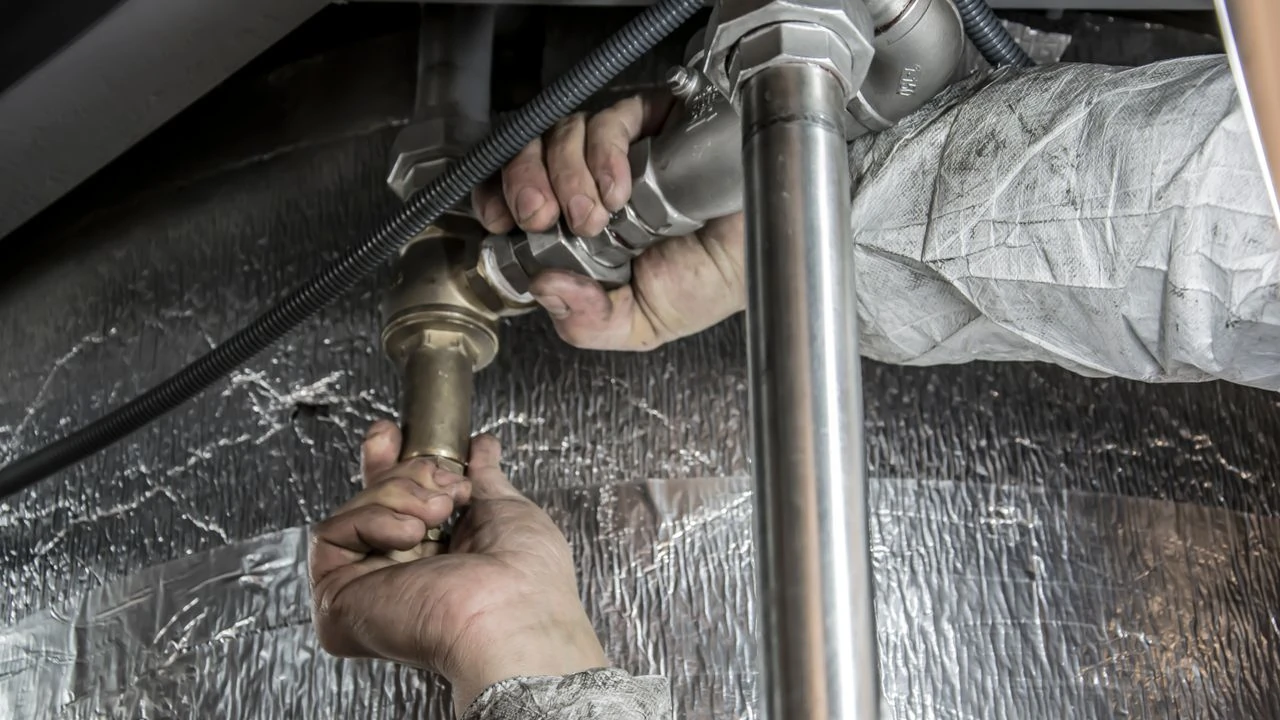
The well version reads differently: a $1,400 permit renewal under the village's grandfather clause, a mandated pressure-tank replacement at $900 installed, two lab panels at $180, and a certified backflow assembly on the house line at $720, which totals $3,200 once and then nothing. No monthly bill. The pump draws whatever watts it draws. The 1983 well has needed exactly one repair in my ownership, a $310 pressure switch in 2021, which is a maintenance record no municipal utility has ever matched anywhere I have lived.
my neighbor chose the pipe
My neighbor Dell chose the pipe in June, and his reasoning was honest: he is 71, he does not want his daughter managing a well after he is gone, and municipal water is one less machine for an estate to explain. His trench ran 30 feet down the shoulder, lucky and straight. Mine would cross a driveway and graze the septic field, which is a different conversation with a backhoe.
71 and one less machine
I respect his math altogether. It just is not mine: I am 54, I like machines I can fix with parts from the hardware store in town, and my well house is the tidiest 40 square feet I maintain. Two men, two roads, one aquifer. We still split a cord of firewood every fall, which tells you which neighborhood this actually is.
zero coliform
The deciding document was a lab report I spread on the kitchen table in late July: hardness at 24 grains, which is high and honestly softened years ago, but zero coliform, nitrates at 2.1 against a limit of 10, and iron low enough that my only water apology is white residue on the faucets. That paper beat the $14,000 quote in a way no argument had managed. I filed the renewal papers on July 30. The county inspector came out August 6, watched me flip the breaker twice, signed, and told me my well had better paperwork than most fiancés.
the $10,800 question
The gap between the two roads was $10,800, and what I did with the not-spent money was: nothing. It stays liquid. The $3,200 came out of cash without touching a HELOC I never opened and never will, because the only thing less romantic than borrowing money is borrowing money at 8.75 percent to pay for a monthly subscription I already turned down once in my life.
38 months of $85
The village math did make me check my refinance options twice, I will admit — 38 months of the $85 charge totals $3,230, nearly the whole permit renewal, before a single gallon gets measured — and if that charge ever climbs, the well math gets re-run at the kitchen table with the same pencil. That comparison is the whole decision. Water I do not pay monthly for, at a house I already heat with wood.
the certificate in the well house
The new permit certificate hangs in the well house now, next to the 1983 original, and the $14,000 quote is taped to the same wall as a receipt for the road I declined, in a building that hums 180 feet into the ground and asks for nothing monthly. The next renewal is August 2029, the same month the village deadline lands on everyone who chose the pipe. I will walk out there some evening, 6:15-ish, and hear the pressure tank click off. Cheapest sound on the property. I plan to keep it that way for decades.