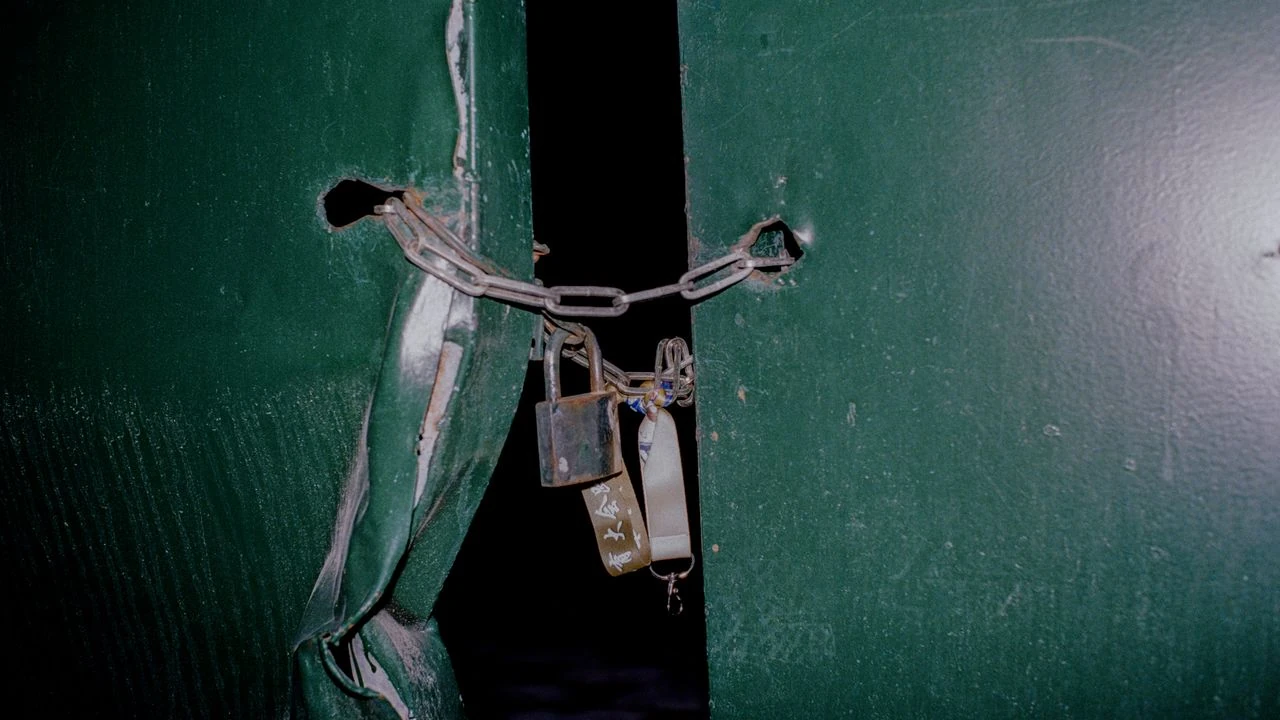
Sunday, March 1, at 9:10 in the morning, I was standing in the foyer of a house I had owned for exactly six days, holding a coffee and watching a locksmith named Dave kneel at my front door with a paper invoice clipped to a board. The plan I had rehearsed was simple: rekey everything, all seven exterior and passage-door locks, approximately $260 by my estimate, because new-owner paranoia is a budget line like any other. Dave studied the doors for a while. Then he broke my plan in half.
six days a homeowner
He said three doors were worth doing and four were not, and he said it the way a man tells you your tire still has tread — flat, unbothered, mildly annoyed to be the bearer of good news. The front door, the back door, and the garage-to-house door had builder-grade cylinders that a motivated teenager with a $15 pick set could defeat before the kettle boiled. The other four? Interior passage doors to the basement and side porch, fitted with decent replacement hardware sometime in the 1990s by a previous owner who had plainly already fought this battle, and rekeying those would mean buying new pin kits for locks that were, in his words, already better than the ones I was worried about. He was making less money by telling me this. I stood there holding my coffee and listened to a stranger argue against his own invoice.
the clipboard with my budget on it
The honest version of the bill came to $165: three rekeys at $40 each plus a $45 service call. Written in pencil. My moving spreadsheet had budgeted $260, and the gap between the two numbers was $95, which I confirmed twice cuz gaps that size ordinarily mean somebody rounded wrong. I asked him whether three doors was honestly enough, and he pointed at the basement door's hardware and told me to spend the difference on a reinforced strike plate instead, which he installed for parts cost while I watched and felt slightly robbed of my own catastrophe.
twelve dollars of hardware
The strike plate took him nine minutes: a heavier steel plate, three-inch screws that bite into the stud instead of the jamb trim, and a lecture about how most forced entries are honestly just door frames losing arguments. Twelve dollars of hardware. He charged me for the plate and threw the screws in, which is not how I had anticipated the first repair of my ownership to go. The front door still has that plate. I have tested it more times than any reasonable person would admit.
what he refused to sell me
Context, stripped down: I had closed six days earlier with 3.5 percent down on a 6.4 percent mortgage rate, which means my cash cushion was a puddle and every avoided dollar mattered more than it would at any other point in my life. The high-yield savings account I had opened for the house held $1,900. The spreadsheet lived on paper, clipped to a folder, because the laptop was still sealed in a box marked KITCHEN MISC for reasons nobody can explain afterward. A $95 error was going to be felt.
the second transaction
Monday morning, before work, I walked into the credit union branch on Grover Street and deposited the $95 into that high-yield savings account as its second transaction ever, and the teller stamped the slip without asking why a grown man was ceremoniously banking less than a hundred dollars. It felt childish. It felt necessary. At 4.0 percent the money would earn about $3.80 over a year, a laughable figure, til you remember what the $95 was actually doing out there in the world: proving that a budget survives contact with honest contractors.
the chimney sweep who went the other way
April brought a chimney sweep who ran the mirror-image play, inspecting my flue and producing a $1,900 lining-replacement proposal with the urgency of a fire marshal filling out paperwork he had pre-printed. I reckoned of Dave. I asked the sweep to show me the cracks on his camera, and the footage showed hairline glazing that his own industry manual classifies as monitor and retest, not replace. I paid $180 for the cleaning, booked a recheck for November, and walked away from the rest with zero apologies. Not every tradesman is Dave. But once you know what Dave sounds like, the imitations announce themselves.
seven doors, one question
The question I now ask before signing anything is modest enough to fit on Dave's pencil invoice: what would you skip? Six months into ownership it has saved me more than the original $95 — once on a fence repair, once on gutter guards the installer admitted my three scraggly maples did not justify. The front, back, and garage doors still turn on their $40 cylinders. The invoice lives in the drawer under the takeout menus, and on slow mornings I pull it out and read the pencil line where a man with a clipboard chose my budget over his own ticket. Not bad for a Sunday. Standing in that foyer on March 1, I believed I was hiring a locksmith. Looking back, it was closer to a reference check, and I have been checking references ever since.