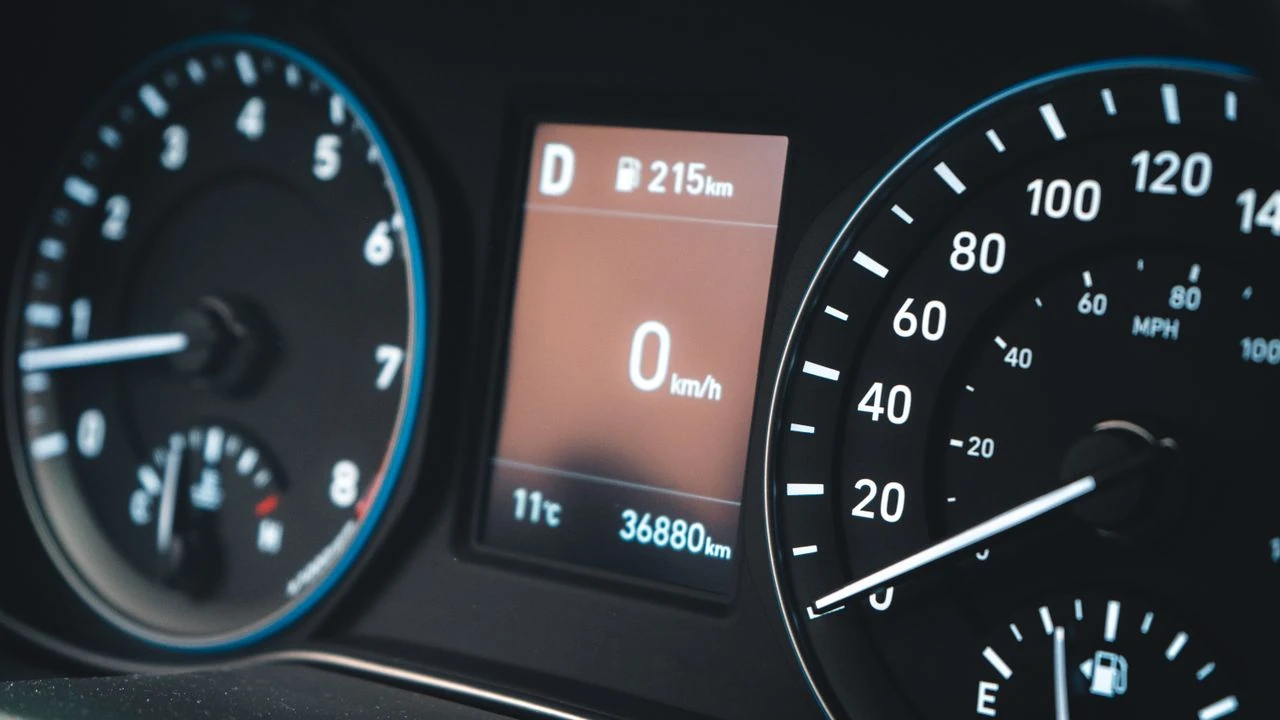
At 6:52 on a Thursday evening my CR-V went dark in lane four of the cash tolls on Kaw Valley Parkway, not the engine, just the fob, which picked that exact rectangle of painted concrete to stop talking to the car. The dash threw KEY NOT DETECTED in orange. Nine cars stacked up behind me. My shirt stuck to the steering wheel.
Here is what was at stake. A 2019 CR-V with push-button start refuses to crank when it cannot see its fob, and the fob had been flashing a low-battery warning since February 17, which I had been treating like a nagging check-engine light, which is to say ignoring it fully. A tow that night ran $175. The dealer wanted $480 the next morning plus a ride across town. Meanwhile the warning on my dash had effectively billed me for nine strangers' patience at $1.75 a car. None of that math showed up until the fob said no.
The locksmith on the phone asked me one odd question before quoting a dime: did I try holding the fob against the start button. I had not. It worked on the second press, the engine caught, and the attendant waved me thru like he had watched a hundred of these, and the real fix, when I ultimately gotta it a week later, cost less than the large pizza I ordered that night from the safety of my own driveway.
lane four, hazards blinking
Hazards on, door cracked open into the crosswind of passing trucks, an attendant leaning out of his booth with the cash tray extended toward me like a peace offering. He held my $1.75 hostage until the brake lights proved I was not dead in his lane. Fair. The dash clock said 6:54 by then. Two minutes had eaten my whole evening.
nine cars and one dead fob
Nine cars. I counted them in the mirror, the way you count wave crests when you are already wet, and a Sierra idled close enough that I could hear a betting commercial playing thru his open window. Every set of headlights behind him arrived, stacked, and stayed. The fob sat in my palm like a river rock, heavy, silent, no red blink when I pressed lock. Dead weight. I had owned that fob for six years and never once reckoned about its battery, the same way you never think about a smoke detector until it starts yelling at three in the morning.
the question the locksmith asked
Darnell answered on the second ring at 7:05, a mobile locksmith working out of a white caravan, and before he quoted anything he talked me thru the parlor trick: nearly every push-button car built this decade can read a weak fob thru induction if you press the plastic shell right up against the start button. It caught on the second press. The engine turned over and nine cars watched me apologize with a wave. He still charged the call-out minimum. Fair again.
two weeks of warnings I ignored
The low key battery warning had been cycling on the dash since February 17, a slight yellow fob icon with an exclamation point, appearing and vanishing like a cat that only wants you when you are busy. I read it as noise. Modern cars nag so constantly that real warnings drown, and I had spent two weeks proving the boy-who-cried-wolf problem applies to instrument clusters. Battery warnings are not the check-engine light. They are the responsible older sibling, and they mean it.
the $340 quote
Darnell quoted $340.50 on the phone and itemized it out loud while I talked myself through the math on the back of an insurance card: $95 call-out, $165 to cut and code a spare key, $80 to program the fob to the car. Set against the tow-and-dealer route, $175 tonight plus $480 tomorrow plus a stranger driving my wife to work, the $340 stopped stinging before he finished his second sentence. The money came out of the car bucket in my high-yield savings, where it had been sitting at 4.2 percent waiting for exactly this kind of evening. Cash bucket. Clean exit.
a spare cut in a driveway
He rolled up at 8:20, cut the new blade on a machine bolted inside the caravan, paired the spare fob to the CR-V in about six minutes, and took my card with the weary patience of a man whose busiest hours are everyone else's worst ones. Forty minutes, driveway to driveway. He said winter keeps him in dead-fob calls six nights a week. Cold murders coin cells. He also floated a six-month financing plan through an app for the balance, which meant a hard pull on my credit score over a $340.50 invoice, and I declined before he finished the sentence. My credit score has enough dents from 2019 without renting a key.
the coin cell behind a tiny catch
A week later, still sore about the invoice, I poked at the tiny catch on the original fob with a flathead, popped the shell over the kitchen sink, and found the CR2032 reading 2.1 volts, which in coin-cell language means deceased. Which means done. The parts store wanted $8.99 for a five-pack. Four minutes with a fingernail and the fob came back to life, chirping the locks like nothing had happened. The household now runs two live fobs and a sandwich bag of three spare cells in the glovebox, and every bit of it traces back to one orange warning I swiped away in February.
the $9 receipt
The receipt says $8.99 and I keep it on purpose, pinned next to Darnell's $340.50 invoice on the corkboard, a before-and-after pairing that no spreadsheet quite captures. Same fob. Same problem. One fix cost thirty-eight times the other, and the entire difference was two weeks of me treating a dash warning as decor instead of data. I moved $20 back into the high-yield savings bucket before Darnell's van reached the end of the street, and the bucket is whole again, but the corkboard pairing stays up where I can see it.
back through the same tolls
Last Friday I came home through the cash tolls again, same lane four, same attendant, engine humming. He remembered me. The new spare rode in the center console, the revived fob rode in my jacket pocket, and the sandwich bag of spares rode in the glovebox right where the registration lives, so the whole rescue kit travels together now. The dash has stayed quiet since the swap. No orange letters anywhere. Nine cars can queue behind me any evening they like. I carry batteries now.